NARRATIVE FRAMES
It doesn't tell you what people think.
It tells you how they think.
A peer-reviewed methodology for decoding the hidden reasoning structures that determine whether communications on complex issues actually land.
The comprehension gap
When people start thinking about large, abstract concepts like artificial intelligence, climate change, or the economy, they are so enormous and complex that our brains can't reason about them directly.
Instead, we need to use a cognitive tool to simplify it, connecting the abstraction to something far more familiar and everyday. That tool is metaphor.
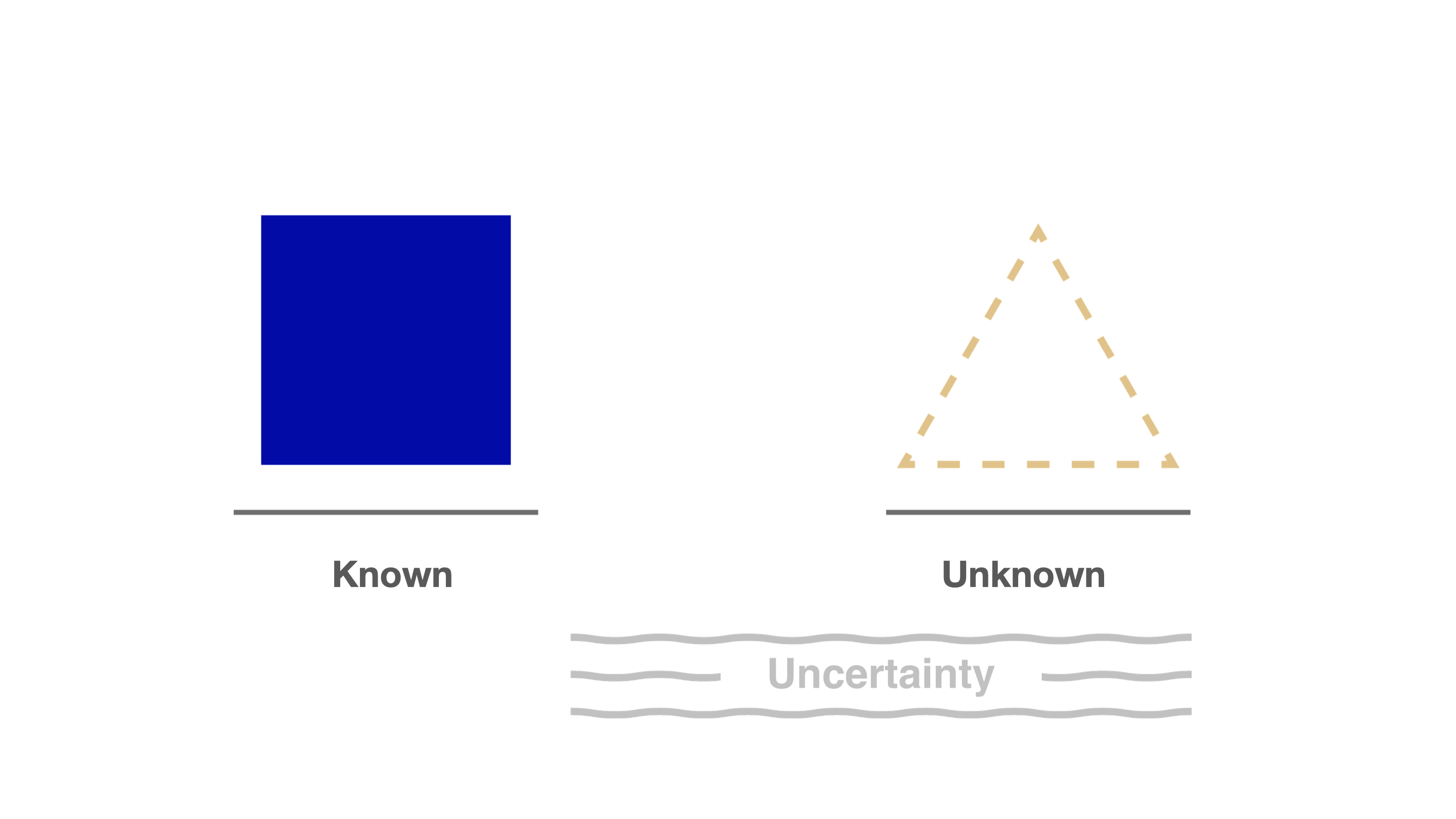
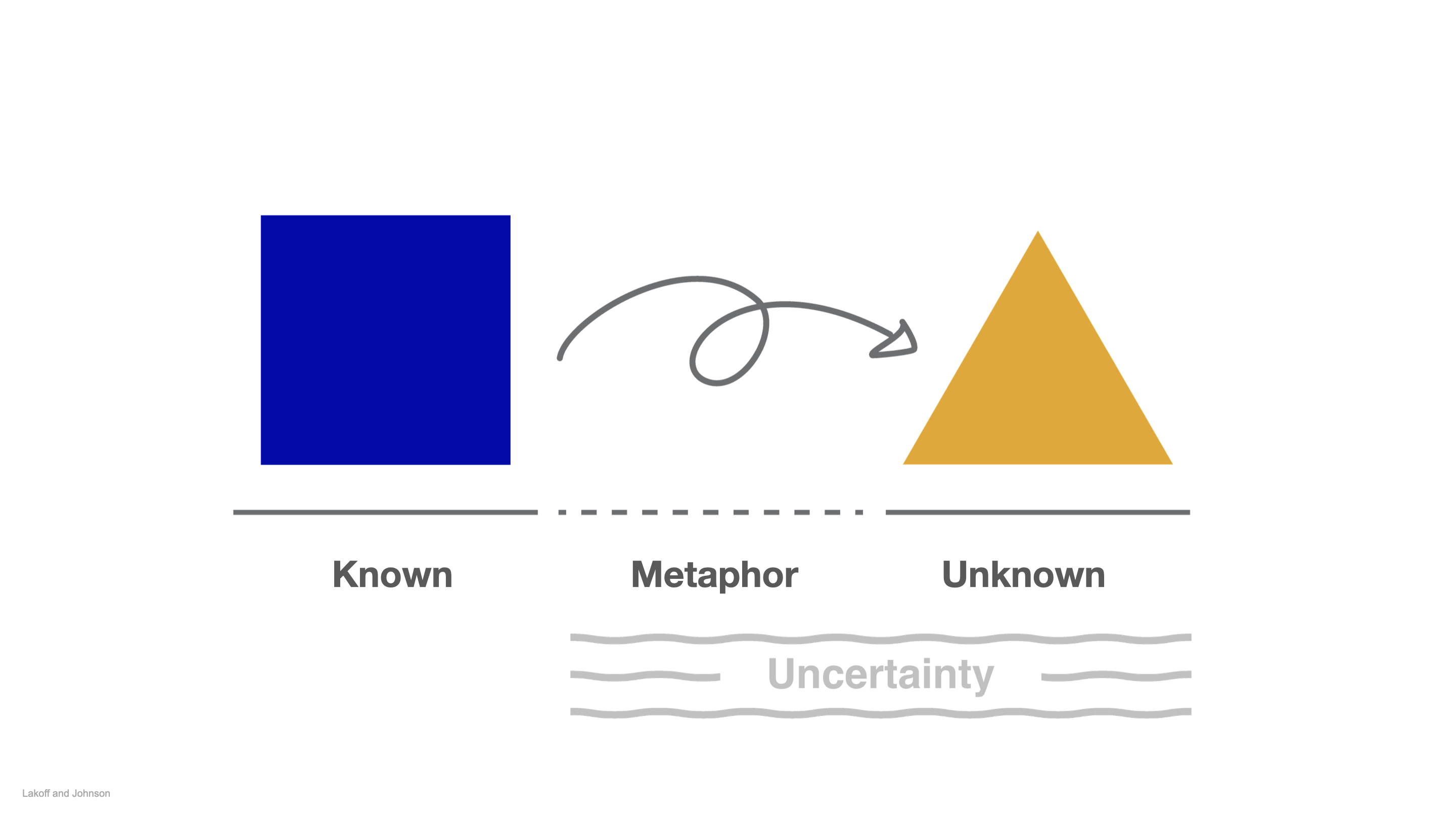
But whether we call AI a tool, a co-worker, or a mind, it preemptively determines the opportunities, risks, and actions we imagine are possible.
of all typical speech is metaphorical.
of all political and policy speech is metaphorical.
of people are consciously aware they're reasoning through metaphor when they do it.
Metaphors are the building blocks of narrative
Metaphors rarely work alone. They compound throughout a text, each one reinforcing the logic of the last, until they form a narrative. And narratives are the working world model that shapes how people reason about an issue, decide what matters, and determine what action feels right.
That is why metaphorical framing matters. Facts, rebuttals, and policy arguments usually operate downstream, once people have already decided what kind of issue they think they are looking at. Framing works upstream. It helps determine that basic sense-making process itself.
Subconscious
They're processed before critical thinking engages
Bypass-capable
They circumvent stated beliefs and rational objection
Sticky
They're resistant to correction once established
Compounding
Each repetition deepens the frame's logic
Narrative Frames is a toolkit that gives you a systematic way to see those stories, understand their structure, and build better ones.
What a frame looks like up close
This passage was delivered to the European Parliament. Read it once. It sounds reasonable. Now look at what's underneath.
As the surges forward, it erodes traditional boundaries. We must reinforce our society and prepare for a deluge of unintended consequences.
Just like we prepare ahead of natural disasters, we need to develop an emergency plan, inspect our safety systems, and, if we have time, build new protective infrastructure.
Read it naturally. It sounds measured, reasonable, even wise. But beneath the surface, a single metaphor is doing extraordinary work.
Once AI is water, the entailments follow automatically. It "surges" and "erodes." We must "reinforce" and "prepare for a deluge." These aren't separate metaphors — they're the logical consequences of the first one, extending its power through the entire passage. Each word strengthens the frame.
This speaker uses the "Natural World/Ecosystem" narrative frame, connecting AI concerns to a domain where people already know what to do: disaster preparedness. By referring to emergency plans, safety systems, and protective infrastructure, the audience inherits not just a way of seeing the problem but a ready-made set of solutions. They don't just hear an argument. They inherit a worldview.
But this frame also raises a critical question: is it helpful to suggest AI progress is a force of nature, rather than a set of choices made by people?
Once you can see the frame, you can judge whether its logic serves your objectives or works against them.
22 primary frames. 28 sub-frames.
Built from 685 metaphors.
A shared vocabulary for the reasoning structures that shape public discourse. Drawn from 82 critical metaphor studies and three decades of cognitive science.
.webp)
Policy challenges framed as existential conflict requiring mobilisation.
"The battle for data privacy."
Explore this frame.webp)
Progress as forward movement toward an undefined destination.
"We're on the path to AI regulation."
Explore this frame.webp)
Systems as engineered mechanisms with levers, switches, and outputs.
"We need to pull the right policy levers."
Explore this frame.webp)
Technology as an organic force that grows, evolves, or overwhelms.
"A tidal wave of automation is coming."
Explore this frame.webp)
Technology through the lens of creation myths, gods, or prophecy.
"We're opening Pandora's Box."
Explore this frame















































How we use it
Decode
We analyse the metaphorical landscape around your issue. Which frames are active, who's using them, and what reasoning they generate.
What you get: A frame map of your issue space, showing which cognitive structures are dominant, contested, or absent.
Diagnose
We identify which frames are helping your case, which are actively working against you, and which your opponents have embedded so deeply that your audiences may have already internalised them.
What you get: A strategic assessment that explains why specific messages or campaigns haven't landed, and what's blocking them.
Design
We develop communications strategy built on the frame architecture. The underlying reasoning structures that make messages land and stick over time, not slogans.
What you get: A reframing strategy with specific language, message hierarchies, and frame-level positioning for your key audiences.
Your messages arrive in a cognitive environment shaped before you enter the conversation.
The framing already surrounding an issue is not just rhetoric. It is a reasoning structure your audience may already be using to make sense of it.
Most communication problems are not problems of volume, but of framing.
INTERACTIVE TOOL
See how your stakeholders reason about AI
The Narrative Frames Explorer breaks down all 48 Narrative Frames with definitions, real-world examples from political and corporate speech, strategic implications, and identification criteria for each. Start recognising the frames in your sector.

The research behind the methodology
Narrative Frames draws on three decades of research in cognitive linguistics, conceptual metaphor theory, and critical discourse analysis. The methodology was developed during a year-long research programme at the University of Cambridge, building on foundational work by Lakoff and Johnson, Charteris-Black, and Fisher's narrative paradigm.
The taxonomy was constructed from a systematic analysis of 685 metaphors in the MetaNet database cross-referenced with 82 published studies. It has been validated through application to 862 coded fragments across 248,293 words of US, UK, and EU political discourse, with inter-coder reliability of 0.65 Krippendorff's alpha on the 22 primary frames.
The frames are already shaping how your audience understands the issue.
The question is whether you can see them.
Whether you are preparing a legislative push, redesigning a campaign, trying to build trust, or diagnosing why your messages are not landing, this is where to start.
Start a conversation Or read the full methodology paper